


Funding Parents’ Medical Care from Overseas: Fast Transfer Guide
 Panda AI
This guide helps NRIs living in the US, UK, or Europe transfer money quickly to fund their parents’ medical care in India. It covers the fastest transfer methods, what to prepare in advance, the correct purpose codes, the tax position for both sender and recipient, and how PandaMoney delivers same-day transfers at the real mid-market rate with zero fees.
Why Speed Matters When Funding Parents’ Medical Care from Overseas
Indian hospitals often require large upfront deposits before admitting a patient for surgery or ICU care. ICU treatment can cost ₹20,000 to ₹1,00,000 per day, depending on the hospital and city. A major cardiac surgery can run from ₹3 lakh to ₹25 lakh or more. Hospitals request this payment at admission, not after treatment.
If your parents lack sufficient liquid savings, they depend on you. And if you send via a traditional bank wire, the money may not arrive for three to five business days, when the medical window may have already passed.
Speed in these situations is not a convenience. It is a necessity.
Common Scenarios When NRIs Need to Fund Parents’ Medical Care from Overseas Fast
Most NRIs encounter one of these situations:
- Unplanned emergency: A parent suffers a heart attack or stroke. The hospital demands an immediate deposit. You receive the call at 2 AM and need to send within hours.
- Planned surgery with a tight window: A surgery is scheduled, and the hospital requires full payment 24 to 48 hours before admission
- Ongoing treatment costs: A parent who undergoes chemotherapy or dialysis requires weekly or monthly payments to the facility
All three share one requirement: a transfer method that moves money the same day or the next business day.
Which Transfer Method Works Best for Funding Parents’ Medical Care from Overseas
Not all platforms deliver with equal speed. When you are funding parents’ medical care from overseas, the method determines how fast the money arrives.
Speed and Cost Comparison for Funding Parents’ Medical Care from Overseas

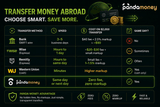
For genuine emergencies, two options stand out: Western Union for cash pickup (if your parents can reach a pickup point), and PandaMoney for direct bank account delivery the same day or next business day at the real mid-market rate with zero cost. Bank SWIFT wires are not suited for medical emergencies.
Step-by-Step: How to Set Up Fast Transfers for Parents’ Medical Care from Overseas
The best time to set up your emergency transfer capability is before you need it. If you complete this setup in advance, you can execute a transfer in under five minutes when the moment arrives.
Step 1: Download and Verify PandaMoney in Advance
Install PandaMoney on Android or iOS and complete the KYC verification before any emergency arises. KYC typically takes a few minutes with your passport and a selfie. If you wait until you need it, verification adds time you cannot afford.
Step 2: Save Your Parents’ Bank Account Details
Store your parents’ Indian bank account number and IFSC code in the app. Most transfer apps allow you to save recipient details so you never have to look them up under pressure. Confirm the details are correct with a small test transfer beforehand.
Step 3: Keep Your Funding Source Connected
Link your US, UK, or European bank account or debit card to PandaMoney in advance. Some platforms require a few days to verify your source account via micro-deposits. Sort this out ahead of time so you can initiate a transfer immediately.
Step 4: Know the Purpose Code to Use
When sending money for parents’ medical care, the correct RBI purpose code is P1301 (Family Maintenance and Savings). Some platforms also list a specific medical treatment category. Using the right purpose code keeps your transfer FEMA-compliant and avoids unnecessary bank queries on the Indian side.
Step 5: Keep a Buffer in Your Parents’ Account
Consider maintaining one to two months of anticipated medical costs as a standing buffer in your parents’ savings account. This gives them immediate access to funds while your transfer is in transit and prevents any gap between the emergency and the money arriving.
Documents and Details You Need Ready for Funding Parents’ Medical Care from Overseas
Prepare these before any emergency:
- Parents’ bank account number and IFSC code (saved in your transfer app)
- Parents’ PAN card number (some platforms need this for larger transfers)
- Hospital name and location (useful if the platform asks for purpose details)
- Your own KYC documents verified on PandaMoney (passport, proof of overseas address)
- An overseas bank account or card linked and verified on your transfer platform
Having these ready means a transfer that would take 30 minutes under pressure takes under 5 minutes when you have everything pre-loaded.
Tax and Compliance: What NRIs Should Know When Funding Parents’ Medical Care from Overseas
NRIs often worry about whether the money they send for their parents’ medical care creates a tax liability in India. The answer is reassuring.
For the recipient (your parents):
Money received from an NRI child qualifies as a gift from a specified relative under Section 56(2) of the Income Tax Act. Gifts from specified relatives are fully exempt from income tax in India, with no upper limit. Your parents do not declare this as income or pay tax on it, regardless of the amount.
For the sender (you as the NRI):
You send from post-tax overseas income. India does not tax you on outward remittances. Your country of residence may have its own gift reporting rules. US-based NRIs should note that gifts exceeding $18,000 per recipient per year may require a US gift tax return, though actual liability is rare. Consult a qualified tax advisor for your specific situation.
Purpose code and FEMA compliance:
For medical care transfers, use P1301 (Family Maintenance and Savings). PandaMoney maps this automatically when you select the purpose in the app.
For a complete guide to purpose codes for India remittances and how they work, the reference covers every code NRIs commonly use.
How PandaMoney Makes Funding Parents’ Medical Care from Overseas Faster and Cheaper
PandaMoney routes transfers through stablecoin rails (USDC/USDT) instead of SWIFT, removing the correspondent banking chain entirely. Transfers land in your parents’ Indian bank account the same day or the next business day, with no cut-off times and no weekend restrictions.
What this means in a medical emergency:
- Send at any time, including weekends and public holidays
- Same-day or next business-day delivery, regardless of time zones
- Your parents receive a clean inward remittance record satisfying RBI requirements
- Zero transfer fees and a real mid-market rate during the current launch offer
On a $3,000 emergency transfer, a bank wire at 2.5% markup costs approximately ₹7,125 in silent exchange rate loss (at ₹95/dollar). PandaMoney costs nothing. That money stays in your parents’ account when they need it most.
Every transfer processes through PandaMoney’s network of 16+ fully authorised banking partners in India, ensuring complete FEMA compliance and a documented inward remittance record.
For NRIs who want to understand how stablecoin rails bypass the SWIFT delays that make bank wires unsuitable for emergencies, the guide explains the infrastructure difference. For US-based NRIs sending larger emergency amounts, the guide on IRS reporting requirements for large transfers covers what kicks in above certain thresholds.
Download PandaMoney on Android or iOS.
FAQs: Funding Parents’ Medical Care from Overseas
What Is the Fastest Way to Send Money to India for Parents’ Medical Care?
PandaMoney delivers the same day or next business day using stablecoin rails, with zero fees and the real mid-market rate. For cash emergencies where your parents cannot wait even one day, Western Union offers cash pickup within minutes at a higher cost. Bank SWIFT wires take 3 to 5 business days and are not suitable for medical emergencies.
Is There a Limit on How Much an NRI Can Send to India for Medical Expenses?
No. India places no cap on inward remittances from NRIs. You can send as much as needed for your parents’ medical care. Your sending country may have its own reporting rules: US-based NRIs should note the $18,000 annual gift exclusion threshold, above which a gift tax return may be required (though actual tax is rarely owed). Consult a tax advisor for large amounts.
Do My Parents Need to Pay Tax on Money I Send Them for Medical Care?
No. Money received from an NRI child qualifies as a gift from a specified relative under Section 56(2) of the Income Tax Act. Gifts from specified relatives are fully tax-exempt in India with no upper limit. Your parents do not declare this as income and do not owe any tax on it, regardless of the amount.
What Purpose Code Should I Use When Sending for Medical Care?
Use P1301 (Family Maintenance and Savings), which is the standard purpose code for NRI transfers supporting parents in India. PandaMoney maps this automatically when you select the transfer purpose in the app. Some platforms also list a specific medical treatment purpose that is equally valid. Using the correct code keeps the transfer FEMA-compliant and prevents bank queries.
Can I Send Money to a Hospital Account Directly for My Parents’ Treatment?
Most hospital accounts in India accept direct NEFT or RTGS transfers from Indian bank accounts. As an NRI, the cleanest approach is to send the money to your parents’ Indian savings account first, from which they then pay the hospital. This creates a clear fund trail and avoids any complications with hospitals receiving direct international transfers.
Disclaimer: This blog is for educational and informational purposes only and does not constitute legal, financial, or tax advice. Transfer speeds, fees, and tax rules change frequently. PandaMoney facilitates all transfers exclusively through authorised and fully licensed banking and financial institution partners, ensuring full compliance with applicable RBI and FEMA guidelines. Always consult a qualified Chartered Accountant for guidance specific to your situation. Verify current RBI inward remittance guidelines at rbi.org.in and Indian tax rules at incometax.gov.in.
Related Articles





GetPandaMoney Inc. is a financial technology company, not a bank. Our product and services are offered in partnership with regulated and licensed financial institutions in each jurisdiction that we operate in. Client(s) deal directly with our regulated partners through the platform provided by PandaMoney.
For any queries or grievances, please write to us at compliance@getpanda.money
131 Continental Dr Suite 305 Newark, DE, 19713 US
©2025 PandaMoney. All Rights Reserved.
GetPandaMoney Inc. is a financial technology company, not a bank. Our product and services are offered in partnership with regulated and licensed financial institutions in each jurisdiction that we operate in. Client(s) deal directly with our regulated partners through the platform provided by PandaMoney.
For any queries or grievances, please write to us at compliance@getpanda.money
131 Continental Dr Suite 305 Newark, DE, 19713 US
©2025 PandaMoney. All Rights Reserved.